← All Client Stories
Healthcare Patient Experience Space Design Buenos Aires 2016

Redesigning a rehabilitation gym so patients could start to believe they would walk again

Patients were calling the parallel bars a cage. Physios had stopped using them entirely; not because they weren’t clinically useful, but because they were making people give up. A research-led redesign of Ciarec Clinic’s rehabilitation gymnasium changed how the space itself felt, and what patients believed was possible inside it.

This project was completed in 2016 as a final-year thesis engagement at the University of Buenos Aires, in co-leadership with Studio ‘La Feliz’ and in partnership with Ciarec Clinic. It is one of the earliest examples of the human-centred, research-before-solution approach that forms the foundation of SHiFT with Purpose’s methodology today.

The situation

The gym worked clinically. It wasn’t working for patients.

Ciarec Clinic in Buenos Aires treats patients through some of the most difficult moments of their lives: post-surgery recovery, relearning how to walk, rebuilding strength and movement after trauma. The rehabilitation gymnasium is where most of that work happens.

From a clinical standpoint, the equipment was functional. But patient experience research told a different story. The space felt chaotic, intimidating, and; in the case of the parallel bar walking system; actively demoralising. Physios called it the cage. Patients called it the cage. It had become so associated with the worst moments of recovery that clinicians had stopped using it even when it would have helped.

The question the project set out to answer was not “how do we update the equipment?” It was: how might we design a better rehabilitation experience so that patients feel more motivated during their sessions and achieve a better, healthier recovery?

Project

Ciarec Rehabilitation Clinic

Buenos Aires, Argentina

Sector Healthcare; Rehabilitation
Year 2016
Partners University of Buenos Aires & Studio ‘La Feliz’
Scope CX research, space design & full build

Why this matters: The same research-before-solution principle that shaped this project in 2016 is at the core of every SHiFT engagement today. The context changes; the commitment to understanding before designing does not.

The research

The space was working against the patients.

Before any design decisions were made, interviews with patients and specialists mapped the full rehabilitation experience; from the moment of an accident through to returning home. What surfaced was not a problem with the equipment. It was a problem with what the space communicated.

“When you first arrive to the clinic you feel afraid of everything; you have to trust people you don’t know. When I met Maria, my physio, it was love at first sight, and I started to think, maybe I can...”

Rehabilitation patient, Ciarec Clinic

“At first you don’t trust 100% in the process. You feel you’re done; but you don’t want to disappoint your family.”

Rehabilitation patient, Ciarec Clinic

“It is like if we were animals in a zoo, caged. Physios say that we have to imagine that we are not there. But have you seen the cage?”

Rehabilitation patient, referring to the parallel bar walking system

“We finally decided to quit using it, because even though it’s very useful, patients get depressed and it becomes counterproductive.”

Physiotherapist, Ciarec Clinic, on discontinuing the parallel bar system

The patient journey map traced the full arc from accident through surgery, rehabilitation, and return home; tracking emotions, feelings, and the specific touchpoints where trust was built or lost. The critical finding: motivation was not a personal trait patients either had or lacked. It was a design outcome. The space could either build it or destroy it.

The guiding design concept that emerged from the research: efficiency through motivation. If patients were more motivated, they would work harder, trust the process further, and recover more effectively. The space itself needed to become part of the therapeutic intervention.

The work

Research first. Design second. Build together.

The project followed a full design thinking framework across five phases, with clinical staff and patients involved at every stage.

EMPATHISE; Understanding the lived experience

Observation, specialist meetings, and interviews with patients and doctors.

The research phase began with direct observation of the existing gym: how it was used, how patients moved through it, where they hesitated, what they avoided. Interviews with both patients and physiotherapists surfaced the emotional reality of the space; the fear on arrival, the tentative first trust, the specific moments where motivation collapsed or compounded.

DEFINE; Mapping the full patient journey

From accident to home: every stage, every feeling, every moment of trust and loss.

A detailed patient journey map documented the full rehabilitation arc; from the shock of an accident and the uncertainty of surgery, through to the gradual rebuilding of confidence in the gym, and the anxiety of returning home. The map tracked feelings, emotions, and the specific interactions that shifted patients from fear toward self-belief. The defining design concept, “efficiency through motivation,” came directly from this analysis: the gym was not neutral. It was either helping patients recover, or it was working against them.

IDEATE & PROTOTYPE; Two rounds of high-fidelity design

The space, the elements, and the experience; prototyped and tested with users.

Two validation rounds produced increasingly refined designs. The first prototype modelled the full gymnasium layout in three dimensions: open plan, colour-coded zones, reorganised equipment placement, and new walking infrastructure that replaced the cage with a system designed around dignity and visible progress. The second prototype refined the parallel walking system and the floor marker system, testing the experience of moving through the space with patients before the build.

CO-CREATE & BUILD; Built with the clinic, for the patients

The designs were fully implemented at Ciarec Clinic.

The designs were not delivered as a report and left behind. They were built. The clinic implemented the full redesign, including the new walking system, the flexible exercise infrastructure, the wall-mounted modular storage, and the colour-coded floor markers that let patients see their own progress as they moved through the space. Every element had been tested before it was built.

“It’s great to see them when they feel they are progressing. So when we can ask them to walk around the gym picking things up, or following the markers we put on the floor; you see it on their faces. That’s when they start to believe they can do this.”

Physiotherapist, Ciarec Clinic
See what this looks like for your organisation →
The shift

A space that had been working against recovery became part of the recovery.

Before
After
Parallel bar walking system associated with fear; physios had stopped using it because it depressed patients
New walking system designed around dignity and visible progress; patients could see how far they had come
Cluttered, chaotic equipment placement with no clear patient flow through the space
Reorganised, open gym with intuitive layout built around how patients actually move through rehabilitation
No visual markers for progress; patients had no way to measure their own improvement from session to session
Colour-coded floor marker system that let patients set goals, track distance, and see their own progress as it happened
Storage and equipment piled against walls, creating a visual environment that communicated disorder rather than care
Wall-mounted modular shelving system that kept the space open, organised, and calming
Fixed exercise equipment with limited adaptability for different patient needs and stages of recovery
Flexible exercise system with adjustable components designed to adapt to each patient’s current capacity and goals
The result

Built. Not just designed.

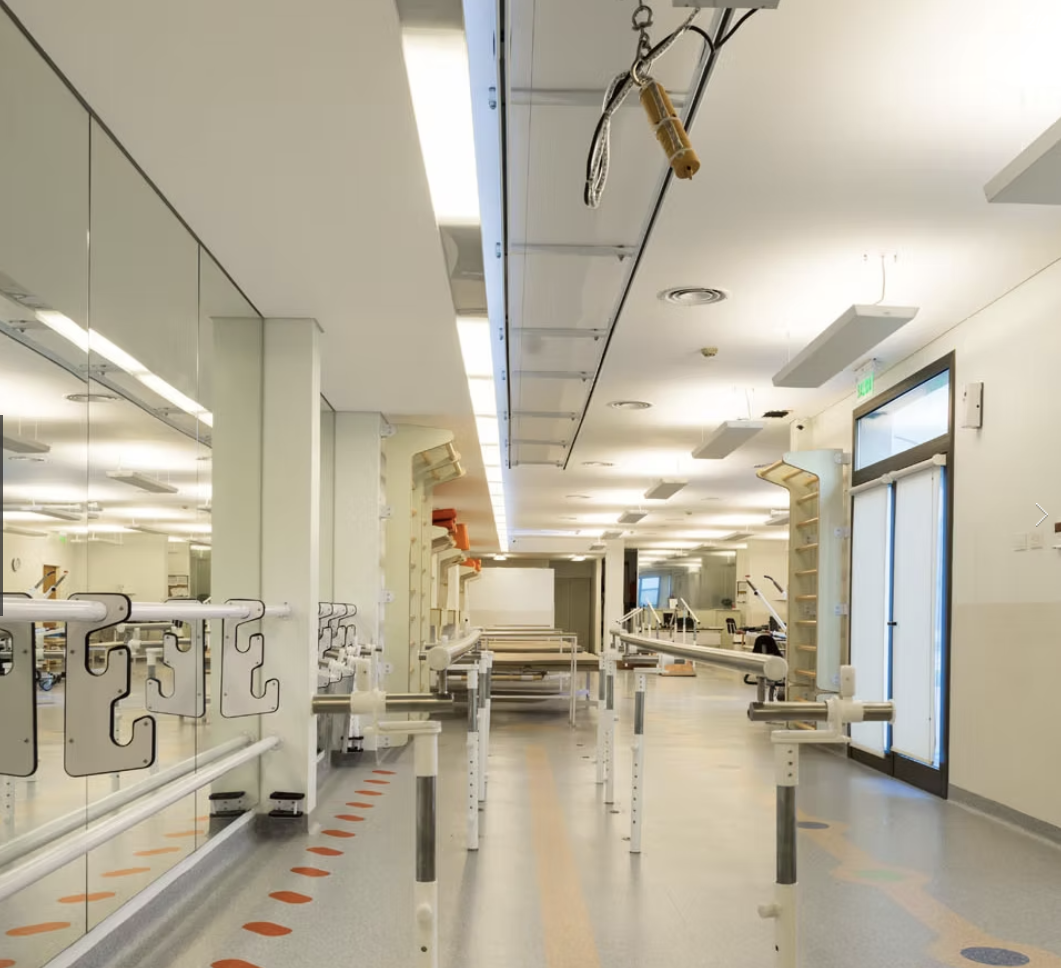
The redesigned Ciarec gymnasium as it was implemented; from the treatment bays to the walking system to the modular equipment storage.

New parallel walking system with ceiling-mounted rail and coloured floor markers at Ciarec Clinic rehabilitation gymnasium
The new walking system; ceiling rail, redesigned parallels, and colour-coded floor markers replacing the ‘cage’ that physios had stopped using
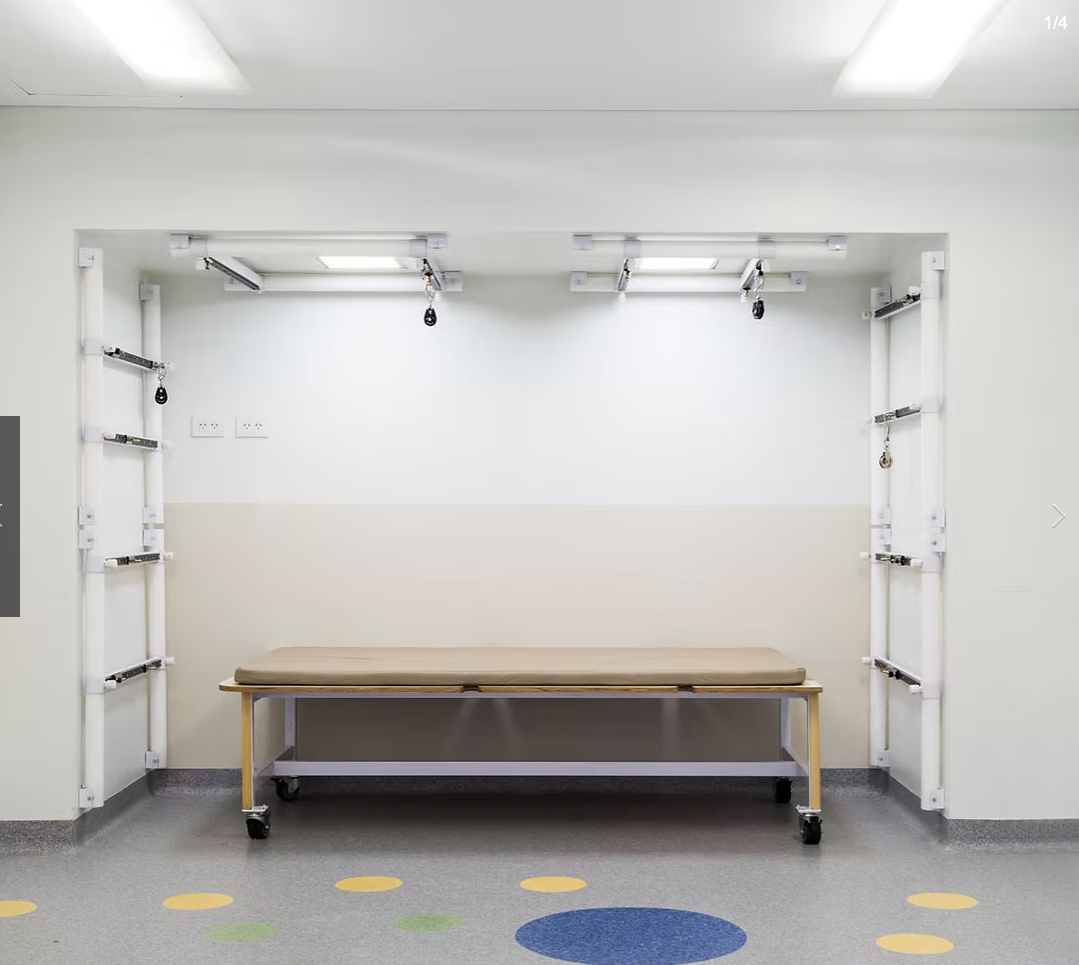
Individual treatment bay with wall-mounted modular system and mobile treatment table
Individual treatment bay with wall-mounted modular storage and mobile table; designed to give each patient a defined, calm space within the gym
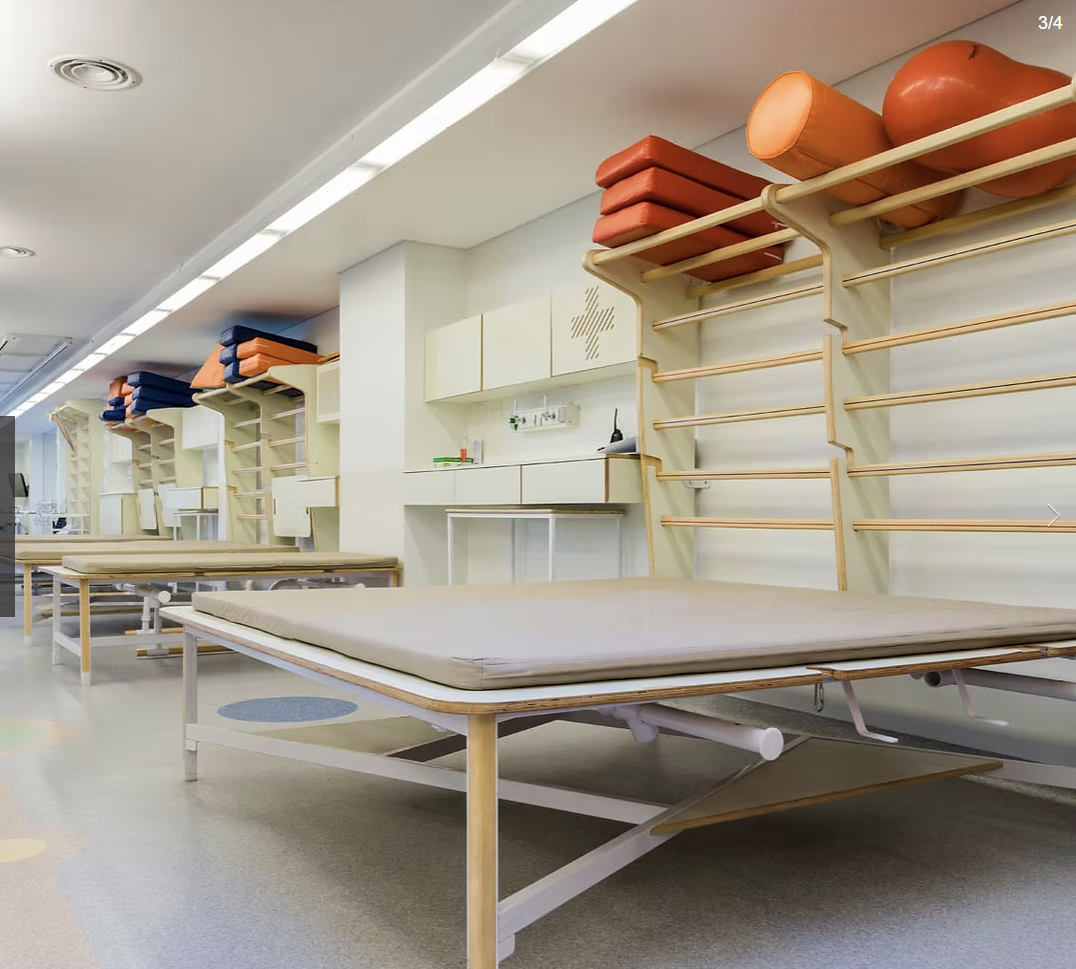
Multi-table treatment room with organised wall shelving and colour-coded rehabilitation equipment
The reorganised treatment room; wall shelving with colour-coded bolsters, open floor space, and no visual chaos
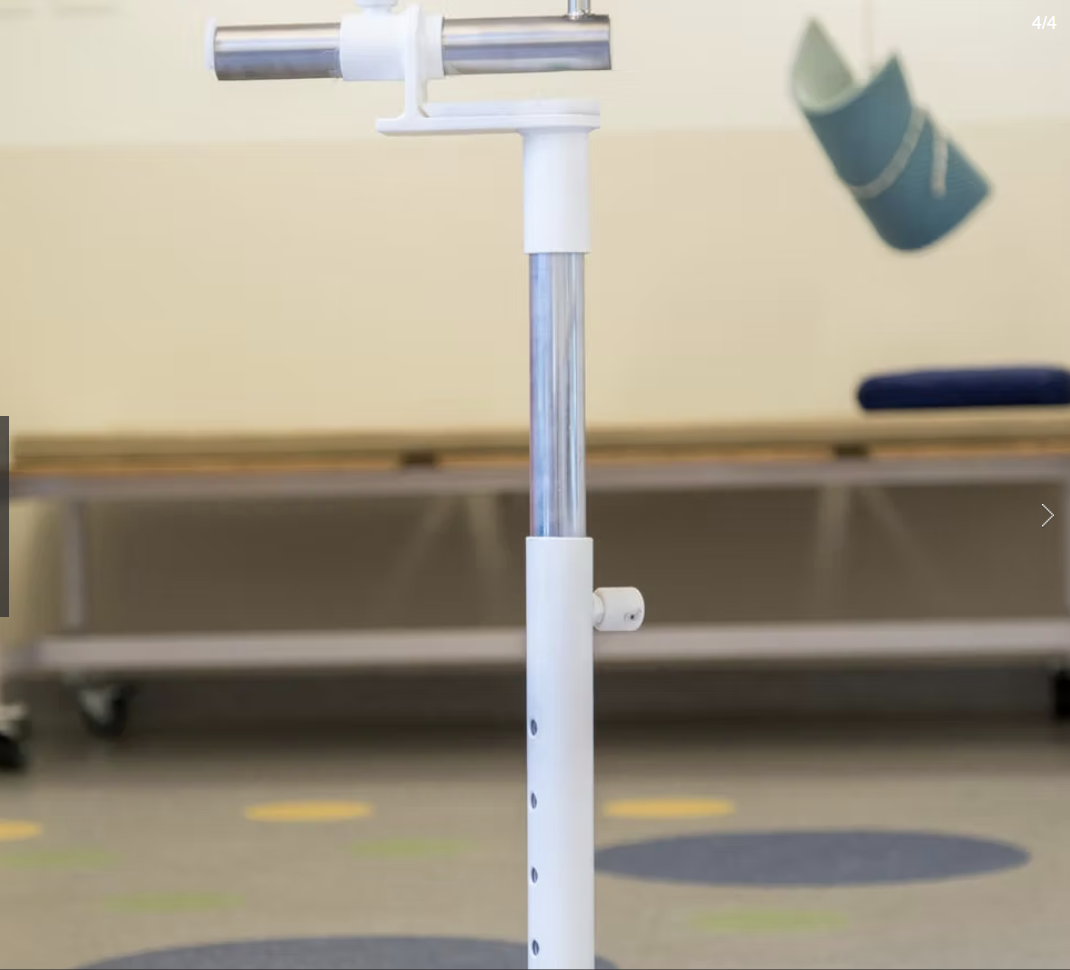
Height-adjustable support stand designed as part of the flexible exercise system
Detail of the flexible exercise system; height-adjustable components designed to adapt to each patient’s stage of recovery
Why this project still matters

The methodology came before the business.

This project was completed in 2016, years before SHiFT with Purpose existed as a business. But it contains every principle that drives the work today.

Research before solution. Clinical and lived expertise valued equally. Prototypes tested with the people who would actually use them before anything was built. A design brief that started with how people felt rather than how the space looked. And a commitment to implementation; not a document handed over, but a space actually built and changed.

The insight that surfaced from this project; that motivation is a design outcome, not a personality trait; translated directly into the way SHiFT with Purpose now approaches customer and employee experience in purpose-led organisations. When the experience is designed well, people engage. When it isn’t, they disengage; and no amount of encouragement fills that gap.

The parallel bars in the original gym weren’t failing because they were bad equipment. They were failing because no one had ever asked what it felt like to stand inside them. That question; what does this experience feel like from the inside?; is still the first question SHiFT with Purpose asks in every engagement.

What would your space say, if your patients could tell you?

The same research-led, human-centred methodology that redesigned this gym is available to your organisation. Let’s start with a conversation.

Book a Discovery Call →